
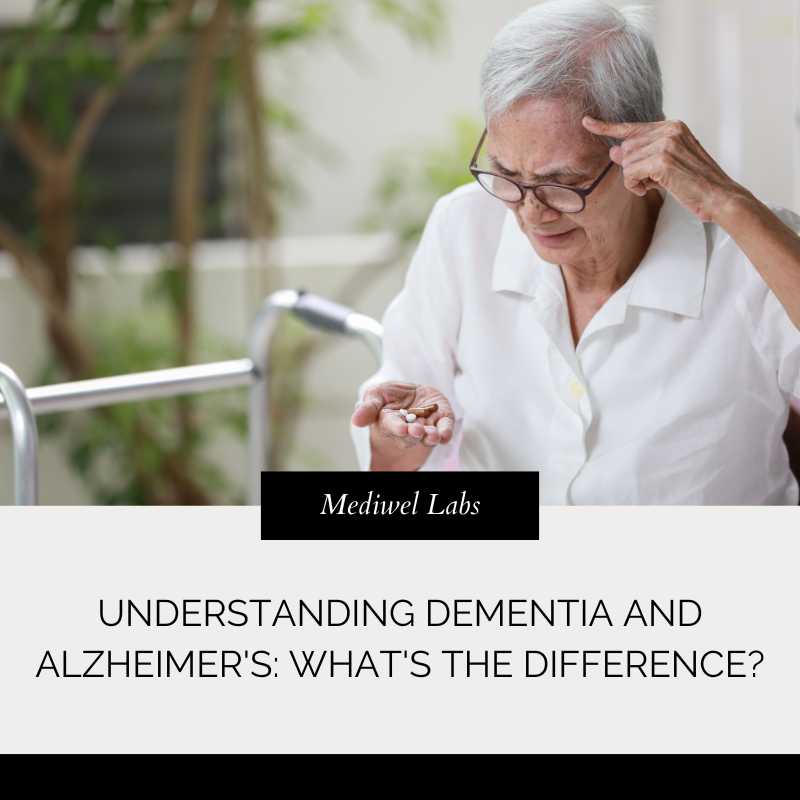
Many people use these terms interchangeably, but there is a clear difference between alzheimer disease and dementia. While they are closely connected, recognizing how they differ is a primary step in learning about your cognitive health and long-term wellness.
Dementia: An Overall Term
Dementia is as an overall term rather than a specific disease. It describes a group of symptoms that affect cognitive abilities. These symptoms can include changes in memory, thinking skills, judgment, problem-solving, and behavior. When these changes are severe enough to impact daily life, they point to dementia.
Dementia happens when various conditions damage brain cells and keep them from connecting. Common signs include:
- Memory challenges, particularly with recent happenings.
- Difficulty with communication or finding the right words.
- Problems with focus and attention.
- Changes in mood or behavior.
- Challenges with reasoning and judgment.
Explaining the Difference Between Alzheimer Disease and Dementia
While dementia is a broad category for symptoms, Alzheimer's disease is a specific brain disease. Alzheimer's is a progressive neurodegenerative disorder, meaning it worsens over time as brain cells are lost.
The main difference between alzheimer disease and dementia is that the former is a cause, while the latter is the set of symptoms.
Alzheimer's typically first affects the part of the brain linked to learning. This is why early symptoms involve difficulties with new memories and reasoning. Over time, these issues lead to the severe symptoms categorized as dementia.
Alzheimer's is the most common form, but several other types exist:
- Vascular Dementia: Caused by reduced blood flow to the brain, often from small strokes.
- Lewy Body Dementia: Marked by abnormal protein deposits; shares symptoms with Parkinson's.
- Frontotemporal Dementia (FTD): Degeneration of specific brain areas leading to changes in personality or language.
- Mixed Dementia: Occurs when a person has changes from more than one type, such as Alzheimer's and vascular dementia combined.
Doctors use specific evaluations to find the underlying cause, as this helps guide care. Understanding this distinction helps you recognize that while all Alzheimer's involves dementia, not all dementia is Alzheimer's.
Supporting Your Cognitive Health
Grasping the difference between alzheimer disease and dementia helps you handle the complexities of brain health as you age. Caring for your brain involves mental engagement, physical activity, and good nutrition.
For adults aged 50 and above looking to support mental clarity, Cere-Nac is a strong option. Cere-Nac is a brain supplement with a scientific blend of NAC (N-acetyl cysteine), Glycine, Alpha GPC, Citicoline, and Phosphatidylserine.

It helps support brain function, manage neuro-inflammation, and enhance memory and focus by targeting oxidative stress.


Leave a comment
This site is protected by hCaptcha and the hCaptcha Privacy Policy and Terms of Service apply.